Why are we losing the climate communications battle?
We are not just facing a climate crisis, but a climate communications crisis.
Social media is simultaneously a blessing and a curse for climate and nature NGOs. People are being constantly bombarded with content, overwhelmed by reels, stories, articles, adverts, breaking news alerts and comments. The information age is also the era of a new battle: the battle for attention.
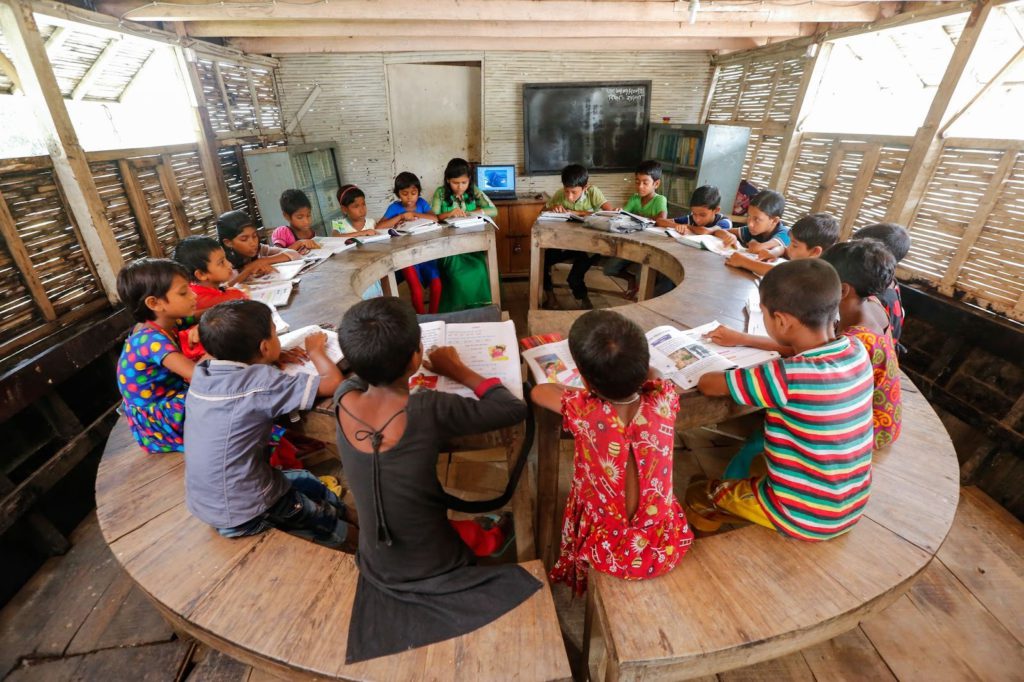
Many of the seemingly logical and dependable tools we have traditionally relied upon to illustrate the urgency of the planet’s situation, such as charts, statistics and slogans are no longer cutting through the noise. If people don’t feel something, they won’t act on it.
So, what other tools can climate and nature advocates use to break through the noise, and engage the public more effectively?

The Power of Narrative in Climate Messaging
Humans are storytelling creatures. For tens of thousands of years, we’ve made sense of the world through narrative, from cave paintings to Netflix, from fairy tales to political speeches. Stories activate parts of the brain that help us feel, not just think. They connect us, shape our values and drive us to act. So, if we are thinking about how to communicate climate change effectively, we need to dig into the science of storytelling, to understand how and why it works so effectively.
The Science behind Storytelling
Research shows that people are more likely to remember a fact when it’s embedded in a story – twenty-two times more likely, according to research by Stanford researcher Jennifer Aaker. 1 When we hear a compelling narrative, our brain releases hormones which grab our attention, and can help us trust, connect and care.2 Stories trigger emotion, and emotion drives action.
In fact, in his Yale-published work on Experiencing Narrative Worlds, cognitive psychologist Richard Gerrig suggests that readers who are transported into a narrative often engage in ‘anomalous replotting’ – actively imagining how events could have unfolded differently to avoid negative outcomes. 3
This is exactly the kind of engagement we aim to inspire.
Creative Campaigns for Environmental Causes

Take Mo, for example. Mo is a baby seabird who features in one of our comics. It doesn’t feel like a traditional plastic pollution awareness campaign, but it does the same job.
More people saw, shared, and commented on Mo’s story than any post we’ve ever done about ocean plastic (over 66m reach and more than 1m engagements). Mo works because he’s someone, not something. The statistic ‘90% of seabirds have plastic in their stomachs’ is horrifying, but abstract. 4 Mo isn’t – he has a name, a face, a body, and when someone brings up plastic waste in a pub conversation a week later, or is about to drop their empty Twix packet on the ground, no one remembers the percentage. They remember Mo.
Evidenced-based climate messaging: Overcoming climate fatigue
Our approach is not a gimmick or a watered-down ‘soft’ type of communication. We take climate change incredibly seriously, and we want others to. It is strategic climate storytelling, a method backed by evidence. 5
Studies, including those in Climatic Change and Frontiers in Psychology, suggest that narratives are more effective than data-led messaging when it comes to shifting public opinion and promoting pro-environmental behaviour. 6 They reduce psychological distance (making big global issues feel personally relevant), increase emotional engagement, and promote sustained attention. In other words, they stick.
Adam McKay understood this when he directed his political satire and allegory for climate change Don’t Look Up, outlining his approach in a co-authored article with scientist Dr Ayana Elizabeth Johnson titled “Why our secret weapon against the climate crisis could be humour”.7
Becoming part of the Climate Communications Movement
So, telling the climate story differently isn’t a branding exercise, it’s the strategy. If we are to build public support for climate campaigns and avoid the ever-encroaching point of no return with emissions, people knowing about climate change isn’t enough: we need them to care. In other words, if we’re not taking storytelling seriously then we’re not taking the climate crisis seriously.
We’ve told hundreds of stories, but there are thousands more waiting to be told.
Check out our collaborations and impact and find out how you can work with Rewriting Earth here.

References
1 https://womensleadership.stanford.edu/node/796/harnessing-power-stories
2 https://maestrolearning.com/blogs/how-your-brain-responds-to-great-storytelling/
3 Gerrig, R. J. (1993). Experiencing Narrative Worlds. Yale UP, p. 177.
4 https://coastalcare.org/2015/09/90-percent-of-seabirds-have-plastic-in-their-stomachs/
5 Dahlstrom, M. F. (2014). Using narratives and storytelling to communicate science with nonexpert audiences.
6 https://www.frontiersin.org/research-topics/7514/the-cognitive-psychology-of-climate-change/magazine; https://www.frontiersin.org/journals/psychology/articles/10.3389/fpsyg.2019.00960/full; Mckie, D., and Galloway, C. (2007). Climate change after denial: global reach, global responsibilities, and public relations. Public Relat. Rev. 33, 368–376. doi: 10.1016/j.pubrev.2007.08.009
7 https://www.theguardian.com/commentisfree/2022/jan/13/director-dont-look-up-climate-crisis-ending